Featured release
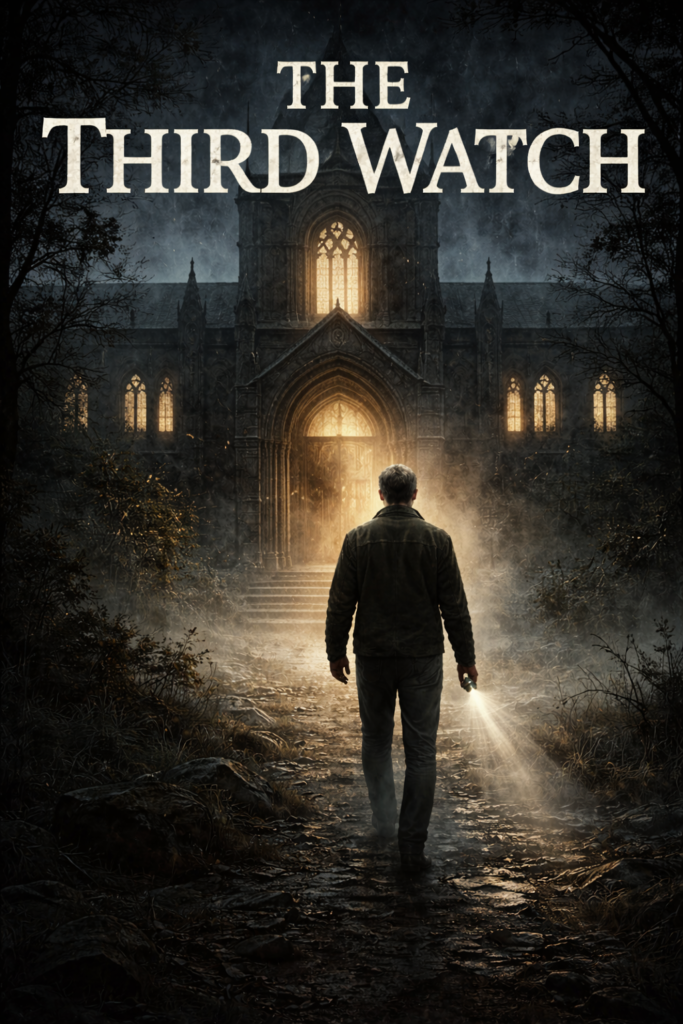
A man is assigned the night shift in an aging seminary slated for renovation—a place long stripped of its sacred objects, reduced to corridors, checklists, and routine.
Elias Ward arrives with a system: log the hours, check the locks, move through the building with measured precision. If everything can be accounted for, then nothing has to be faced. But the night does not remain procedural. A sweetness lingers where nothing should burn. Doors refuse their records. Corridors extend beyond their plans. And somewhere between the hours—unmarked, unannounced—the building keeps its own account. What starts as routine becomes a summons. What is logged as handled refuses to close. And as the night deepens, Elias is drawn toward a reckoning not of what he has seen—but of what he has refused to witness.
Because some watches are not kept by movement.They are kept by presence. And some hours, once missed, do not return.
Published Works
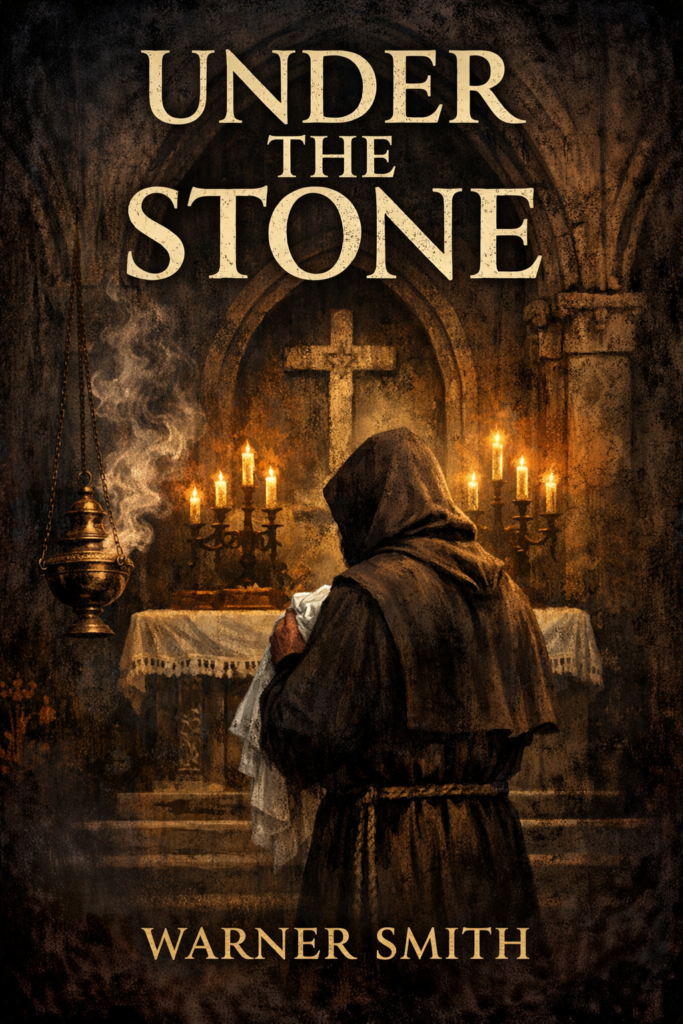
The bell rings. The prayers begin. But something is wrong. When the smoke refuses to rise and a flame turns against the altar itself, a hidden transgression begins to surface within the walls of a silent monastery. What follows is not an accusation—but recognition. Under the Stone is a chilling, atmospheric tale of a sacred order undone, where grace cannot be stolen, and what is taken in secret may never be returned.
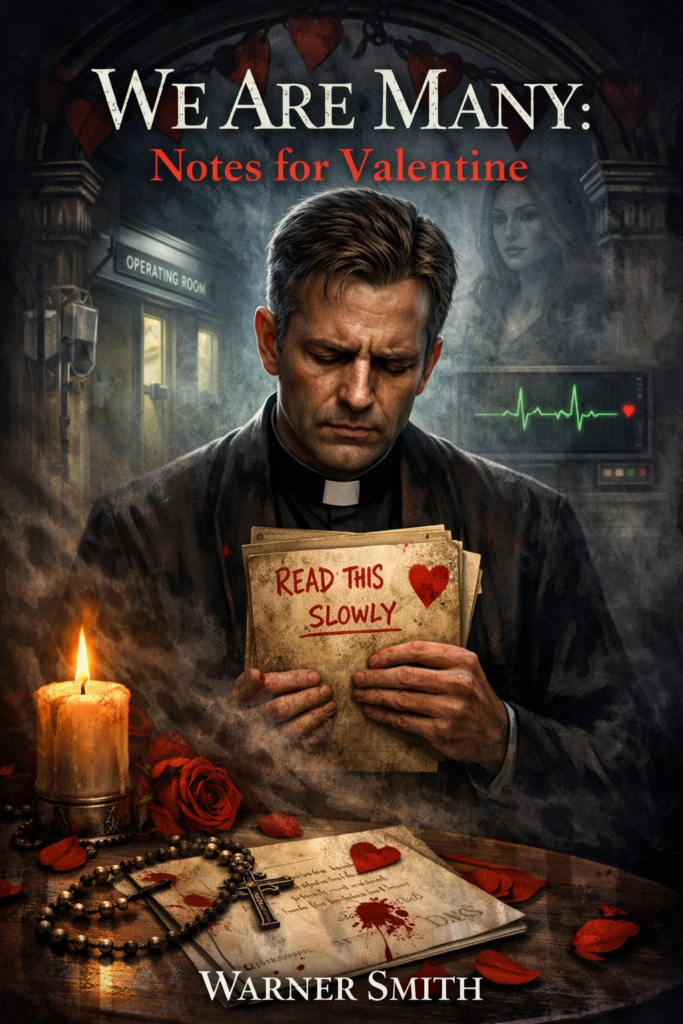
WE ARE MANY: NOTES FOR VALENTINE
A gothic Valentine tale of grief, imitation, and a love that refuses to stay singular.
A hospital chaplain lives with one unforgivable absence: the night his wife died, he was pulled away to administer last rites to a stranger—leaving her to slip beyond his reach while he did the “right” thing. Now, during the hospital’s syrupy Valentine week, he hands grieving spouses a simple one-page packet—Valentine Notes—meant to get them through the worst hours.
When a widower returns the packet, the margins are filled in. Tender instructions. A handwriting the chaplain recognizes too well. Phrases his wife used. Details no one should know. And a boxed “Valentine Night Exercise” that promises comfort—if he reads it slowly.
He tells himself it’s a dream. Grief playing tricks.
But the hospital starts to measure the haunting: timestamps that loop, corridors that repeat, paperwork that corrects itself in the plural. And the voice in the margins—first gentle, then insistent—asks for one thing: consent.
On Valentine’s night, another emergency call cracks open the old wound. The chaplain runs toward a dying patient…only to find someone already there, praying in his cadence, holding the patient’s hand with his hands—being present with terrible perfection.
Because whatever has been writing to him isn’t offering reunion—it’s taking his place.
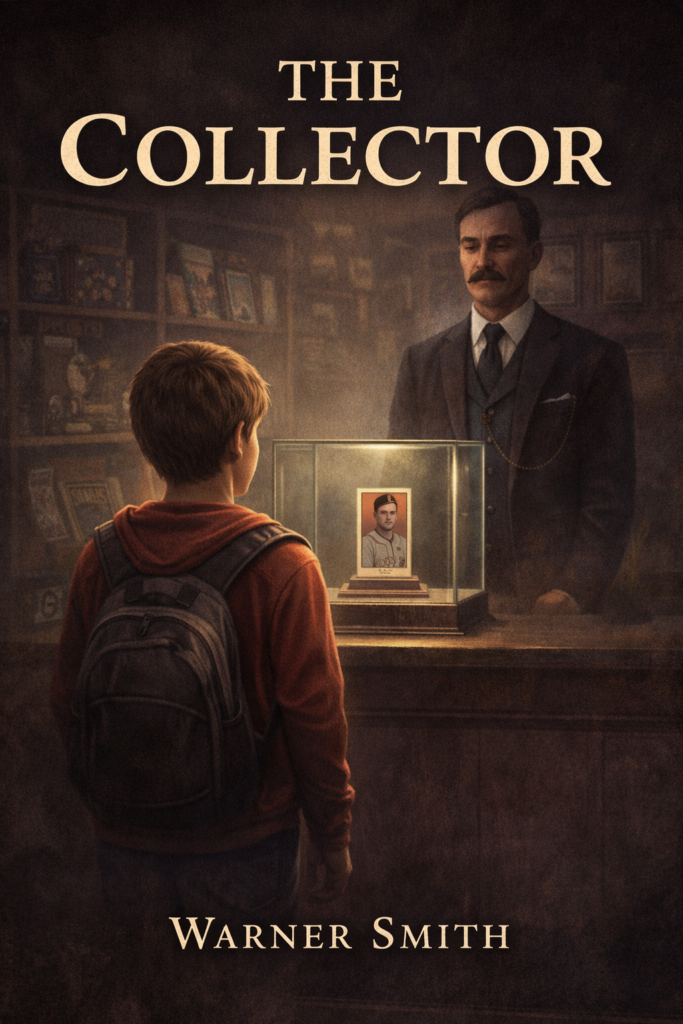
In a town where nothing ever quite changes, a shop appears as if it has always been there—narrow windows, quiet air, and a presence that feels older than the street itself. Barry notices it the way collectors notice everything. Inside waits a single baseball card—flawless, exact, and impossibly rare. The kind of piece that doesn’t complete a collection so much as redefine it. The man behind the counter speaks of value, but not in terms Barry understands. Not at first. What begins as a simple exchange—borrowed items, small deceptions, a quiet rearranging of truth—begins to shift. The rules loosen. The cost deepens. And the careful order Barry has built his world upon starts to fracture under a different kind of accounting.
Because some things are not measured in numbers. Some things are measured in what they take. And in the end, the rarest piece in any collection is not the one behind the glass—but the one that cannot be reclaimed.
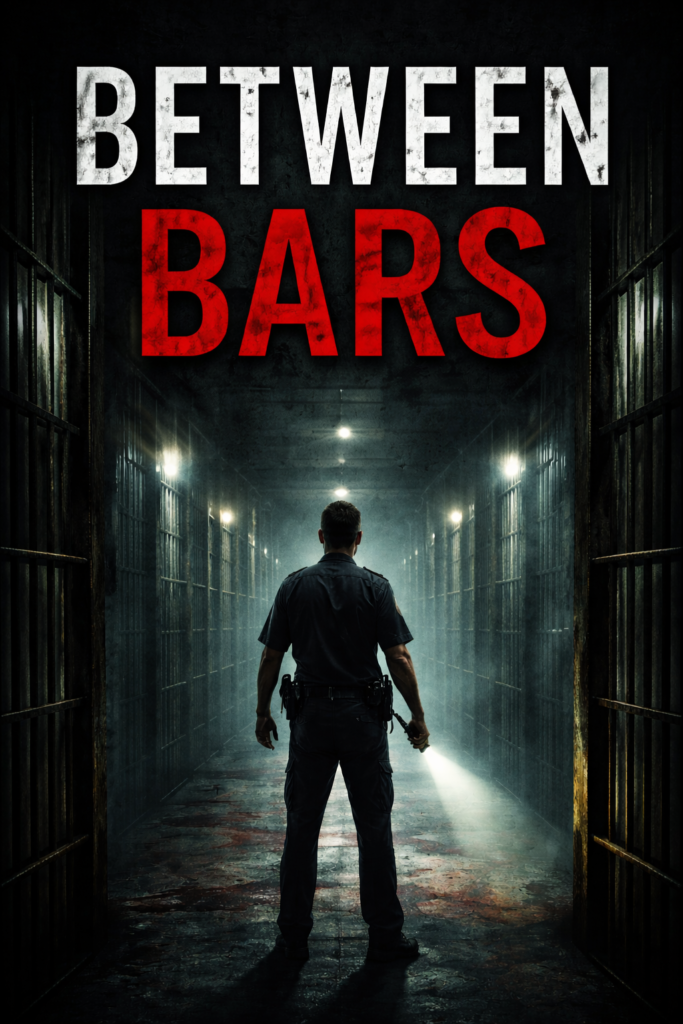
MCI–Cedar Junction, 1987.
Officer Jonas Christensen lives by routine—count the cells, check the locks, trust what’s written. In a place built on order, records carry more weight than memory. If something is documented, it exists. If it isn’t, it might as well not have happened.
That’s how the system holds.
Until a cell he knows was empty is suddenly occupied.
The paperwork agrees.
The name is already there.
No record of arrival. No explanation.
Elias Monroe.
Jonas does what he’s trained to do—verify, document, move on. But the deeper he looks, the more the system shifts. Reports read too clean. Timelines don’t align. Small discrepancies surface—and instead of being corrected, they settle into place as if they’ve always been true.
What begins as a single inconsistency spreads into something quieter—and far more deliberate.
Because this isn’t a mistake.
It’s a record being kept.
And as the line between what is seen and what is written begins to fracture, Jonas is drawn into a reckoning—not only with the prison, but with a past the institution has already filed away under his father’s name.
In a place where truth is decided on paper, reality doesn’t have to break to be rewritten.
It only has to be enforced.
And by the time Jonas understands what the system is preserving…
something he can’t take back will already have been done.

About the Author
Warner Smith is a New England-based fiction writer, theologian, and chaplain whose work lives at the intersection of theology and story. Writing through a Gothic lens, his fiction explores the unseen consequences of ordinary desire — quiet dread, private bargains, and the metaphysical weight of small human choices.
Before theological study, Smith served ten years as a Correction Officer with the Massachusetts Department of Correction, a formation that shaped his unflinching attention to consequence, power, and the hidden costs of survival. He now serves as a chaplain and biblical counselor, walking alongside people navigating addiction, grief, and despair.
Smith holds an M.Div. from Southern Baptist Theological Seminary and is completing a Th.M. at Hellenic College Holy Cross. An Orthodox Christian, he publishes The Moral Imagination, a literary journal devoted to serious craft and Christian moral vision.